Evolution game guide · South Island guide
Crazy Time rules: wheel, Top Slot and bonus games
 Best casinos available in New ZealandUpdated 7 November 2026

Crazy Time is an Evolution live game show with a 54-segment money wheel, a Top Slot multiplier and four bonus games. This guide explains the round order, bonus eligibility and the settings that are not universal across operators.
The short answer
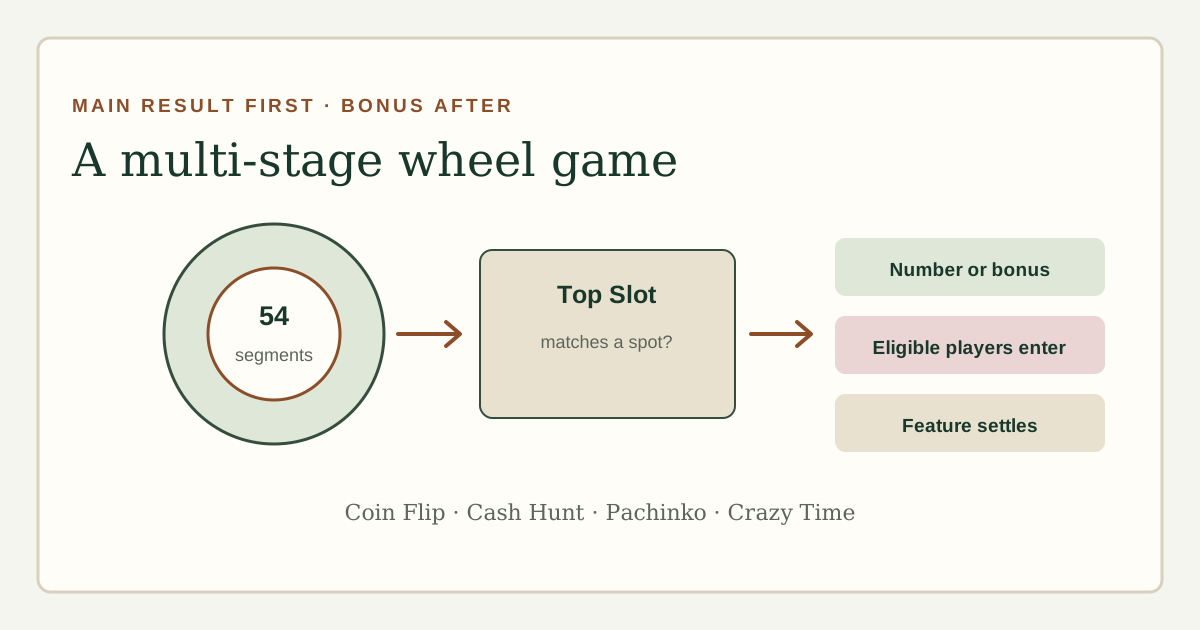
Crazy Time is a live game show built around a 54-segment money wheel and a two-reel Top Slot feature. Before the presenter spins the main wheel, players choose one or more of eight bet spots: the numbers 1, 2, 5 and 10, plus Coin Flip, Cash Hunt, Pachinko and Crazy Time. The Top Slot can select one spot and assign a multiplier, with the Evolution rules page describing a maximum of 50x. If the main wheel stops on a number, the matching wager settles as a number result; if it stops on a bonus spot, only players with an accepted bet on that bonus proceed to its feature.
Each bonus has a different process. Coin Flip resolves through a coin and two generated multipliers; Cash Hunt reveals a player-selected value behind one of 108 symbols; Pachinko drops a puck among multiplier zones and Double results; the Crazy Time bonus uses a separate virtual wheel and chosen flapper. A feature’s maximum multiplier is not a complete payout table. Bet limits, stake return, mode details, account eligibility and local availability must come from the active operator’s own game help.
Read one round from start to finish
The simplest way to follow Crazy Time is to separate the betting window, Top Slot, main wheel and any bonus feature. Betting opens first. Players choose a chip value and place a wager on one or more of the displayed spots. The interface then closes betting before the Top Slot and main wheel resolve. The Evolution how-to-play page describes a 15-second betting period; use the live countdown rather than assuming the same duration on every table or client.
The Top Slot selects a bet spot and a multiplier before the main wheel stops. The multiplier is attached to the selected spot for that round. If the main wheel lands on a different result, a bet on the Top Slot’s chosen spot does not win merely because the Top Slot selected it. The main wheel still decides which outcome occurred.
When the wheel stops, the flapper indicates the winning segment. Number bets can settle at their listed payout with the additional Top Slot effect where the rules say it applies. A bonus segment opens its matching feature for eligible wagers. The bonus animation is a later phase; it does not change the fact that the main-wheel result determined which feature opened.
A player can watch a feature without having entered it. Evolution’s product guide says only players with active bets on the corresponding bonus spot advance to the bonus game. This distinction matters in a shared live stream: a host may conduct a bonus for the table while a particular viewer did not place the qualifying bet. A video replay or public highlight also cannot establish what a specific account wagered.
The eight bet spots
The main wheel has four number spots and four bonus spots. The number spots are 1, 2, 5 and 10. The bonus spots are Coin Flip, Cash Hunt, Pachinko and Crazy Time. They are independent choices in the betting panel, so a player should check the total wager after selecting more than one spot.
A number bet predicts the corresponding numbered segment. A bonus bet predicts that named bonus segment and, if it lands, gives access to that feature under the help rules. Placing a wager on Coin Flip does not cover Cash Hunt, Pachinko or the Crazy Time bonus. The visible colours can make the board easy to scan, but the label under each chip is the definitive reference for what was selected.
Each spot can have a different payout schedule and number of wheel segments. The public Evolution page says the main wheel has 54 segments, and the how-to-play material names the 4 bonus categories and number outcomes. For the complete segment distribution and operator settlement, use the rules linked from the actual game client. This guide does not reproduce a full segment-count table when it cannot confirm the current table-specific help.
Before the betting window closes, look at each chip position and the total amount. If you bet on multiple spots, one may win while the others lose. A displayed multiplier or high bonus ceiling should not distract from the total at risk across all those selections. Decide the full amount before the wheel begins, rather than calculating only from the spot you hope will land.
What the Top Slot does—and does not do
The Top Slot is displayed above the main money wheel. Evolution describes it as a feature that selects a number or bonus spot and assigns a multiplier, with a maximum of 50x. The selected spot is determined before the main wheel outcome. If the Top Slot selection matches the winning spot and the player has an eligible bet, the payout is enhanced under the table’s rules.
The Top Slot is not a prediction of where the wheel will stop. It does not reveal the main outcome early or create a way to add a late bet after the betting period closes. If the wheel lands somewhere else, the Top Slot label does not convert another wager into a win. Treat it as an extra settlement condition attached to one result, not as a separate game that tells you what to bet.
An operator’s help panel should explain which wins can receive the Top Slot multiplier and how the multiplier is applied. Check whether the value is presented as a total multiplier or as an extra enhancement, and whether the original stake is included in the displayed return. Do not transfer a formula from an old screenshot or a different market without checking the active text.
The Top Slot also does not make past multipliers predictive. A record of recent selections shows completed rounds, not a queue of values that must appear next. Even if a particular spot has not recently matched the Top Slot, that absence does not make it due. The supplier’s product page describes the game as random; history is descriptive rather than a control system.
Coin Flip: two sides, two multiplier values
Coin Flip opens when the main wheel lands on one of its Coin Flip segments and the player has a qualifying Coin Flip wager. Evolution describes two randomly generated multipliers, one associated with each side of the coin. The presenter flips the coin; the side that lands determines which multiplier applies to eligible players. Other players can watch the animation without joining the outcome.
A coin outcome and its multiplier are two different events. A player does not choose which side will win after seeing the assigned values. The feature’s rules explain how the result is selected and how the generated value settles. If the operator’s help mentions an extra mechanic or a feature-specific cap, follow that exact wording rather than relying on a video clip.
The main-wheel Top Slot may also interact with a bonus result where the rules permit it. Confirm how the selected spot and multiplier combine with the Coin Flip value, and whether a displayed result represents gross return or net winnings. This is a settlement question; the animation alone may not show how the balance was updated.
Cash Hunt: 108 hidden values and a personal choice
Cash Hunt uses a screen of 108 symbols hiding random multipliers. After the grid is shuffled, a player with an eligible Cash Hunt bet chooses a target. The game reveals the multiplier behind that chosen symbol. Evolution describes the result as individual for each player, so two people who entered the same bonus can select different symbols and see different values.
The target selection is a genuine choice within the feature, but the hidden value is not visible at the time of selection. The grid may look like a shooting game, yet a player is choosing among covered positions rather than aiming at a known payout. A selection method based on colour, location or prior round history does not expose a hidden value that the interface has not revealed.
If the game shows the shuffled grid and selected target, record which target was accepted before the reveal. A video may show a chosen symbol but not the local player’s selection. The current help should also explain whether all values are denominated as multipliers of a specific stake and how any Top Slot enhancement affects a Cash Hunt result.
Pachinko: doubles change the multiplier field
In Pachinko, the presenter drops a puck onto a board with pegs and multiplier zones. Evolution says a landing zone can contain a multiplier or the word Double. A multiplier landing resolves the feature; a Double landing doubles the other multipliers and sends the puck down again. The feature can repeat until a multiplier is reached or the stated maximum of 10,000x is reached.
The Double result changes the available values before the next drop. It is not simply a payout that should be added to the balance while the puck continues. The final result depends on where a later drop lands and on the values present at that stage. If a Top Slot multiplier or bonus-segment multiplier applies, the help panel determines how it combines with the Pachinko result.
The 10,000x value is a supplier-stated maximum for this bonus feature, not a likely or routine outcome. It also does not confirm the operator’s maximum account payout, local bet ceiling or any separate limit that might apply to a particular currency. A title can have a game-level maximum and an operator-level settlement limit, so check both if the operator publishes them.
The Crazy Time bonus: a second wheel
The Crazy Time bonus opens through its own main-wheel segment. Evolution describes a virtual multiplier wheel and three coloured flappers. The player chooses a flapper before the wheel begins. When it stops, the selected flapper points to a segment that determines the result. Doubles and triples can affect multiplier values according to the feature rules.
This virtual wheel is separate from the 54-segment main wheel. The main wheel decides whether a player enters the Crazy Time feature; the virtual wheel resolves the feature after entry. Do not combine the segment count or payout rules of the main wheel with a second wheel unless the official help explicitly states the same count. The current public page describes the feature but does not provide a complete local casino schedule for every operator.
Evolution states a maximum of 20,000x for the Crazy Time bonus. That figure describes an upper feature result, not the expected result of a round, a guaranteed payment or a promise about the amount a person will receive. The active client’s own rules should explain any extra multiplier inherited from the main Top Slot and how the final value is credited.
Payouts, odds and history screens
A complete payout check involves more than the number printed beside a spot. Verify which segment qualifies, what bet is eligible, whether the stake is returned, how the Top Slot multiplier applies and how a bonus result is converted into a balance change. If a table uses “to one” wording, confirm whether the displayed total includes the original wager. This is especially important when comparing a supplier description with an operator’s paytable.
The public Evolution how-to-play page gives core mechanics, feature descriptions, the Top Slot ceiling and several feature-specific maximums. It does not establish the local min and max bets for a New Zealand account or one universal RTP for each table. Third-party guides often publish frequency charts, segment weights or return percentages. Those may describe one configuration, an analytical estimate or a particular operator; they should not be labelled as the active New Zealand table unless the same help text is confirmed.
History screens are useful for checking what happened in earlier rounds. They cannot alter or forecast the next spin. Evolution’s game page states that spins are independent; a recent run of number or bonus results is not a signal that another outcome is due. A chart can help you reconcile a finished round, but it is not a betting system.
Mobile, demo and access checks
The Evolution game page includes tutorial and product material, but playable free access can depend on jurisdiction and on how the local operator has integrated the game. Do not equate a video, a rules page, a supplier demo or a casino lobby tile with confirmation that a New Zealand account can place a wager. The operator’s current lobby and account notices are the relevant source for access.
On a phone, make sure the number and bonus spots remain labelled after the chip tray opens. Check that the stake total stays visible, the betting timer is readable and the Top Slot information does not obscure the board. Open the help panel before placing a bet, because a small screen can hide whether a selected chip sits on Cash Hunt, Pachinko or the Crazy Time segment.
If a result is unclear, use the operator’s support process with the exact title, round ID and time. A supplier overview cannot determine whether a particular account’s bet was accepted before the timer closed. Likewise, a live video can show the feature while omitting the wager ledger needed to confirm eligibility.
A pre-round checklist
Before betting, confirm the full title, the operator’s currency, the amount on every selected spot and the total. Read whether the active table uses any special rule about a tie, a pushed stake or a bonus entry. Check the current Top Slot rule and understand what a 50x maximum means for a matching eligible bet.
If a bonus opens, first identify which one: Coin Flip, Cash Hunt, Pachinko or Crazy Time. Then follow the feature-specific choice and result: coin side, hidden Cash Hunt target, Pachinko landing or selected flapper. Do not treat a feature maximum as a forecast. After settlement, compare the accepted bets and visible result with the account balance and the displayed help wording.
Set a personal spending limit before opening the game. A live host, bright bonus stage and long result sequence can make the session feel different from a simple slot, but they do not change the fact that each wager can lose. No wheel history, streak or selection pattern guarantees a win or recovers money already spent.
Questions readers commonly ask
How many segments does the Crazy Time wheel have?
Evolution’s how-to-play page describes a 54-segment main wheel. The bonus features can use their own board or wheel; do not assume that the main wheel’s segment count applies to the Crazy Time bonus wheel.
What are the Crazy Time bet options?
The supplier lists number spots 1, 2, 5 and 10, plus Coin Flip, Cash Hunt, Pachinko and Crazy Time. Each bonus selection qualifies only for its matching feature under the active rules. Verify the exact label and total in the betting panel before the timer closes.
What is the Top Slot maximum?
Evolution’s public how-to-play page states a maximum multiplier of 50x. It is assigned to a selected bet spot before the main wheel resolves. A maximum is not guaranteed to appear or to match a player’s winning spot.
Can I watch a bonus without betting on it?
The Evolution description says players can observe a bonus, while only those with an active bet on the corresponding bonus spot can participate and win. Watching the stream does not establish that an account had an accepted wager.
Can past results predict the next wheel result?
No. A history page records completed rounds. Evolution describes each spin as independent, so a recent pattern does not reveal which spot, bonus or multiplier is next.
Is Crazy Time available in New Zealand?
The supplier catalogue does not confirm that a named casino offers Crazy Time to every New Zealand account. Check the current operator lobby and the help panel attached to the game. Availability in another market is not proof of New Zealand access.
Sources and verification boundary
Official sources checked 6 October 2026: Evolution Crazy Time product page and Evolution How to Play Crazy Time. They describe the 54-segment main wheel, number and bonus selections, Top Slot, four bonus games and selected feature maxima. Local operator payout tables, stake limits, account access and New Zealand availability were not verified.
Four companion references go deeper than this overview: the Top Slot and its 50x ceiling, all four bonus rounds compared, payouts and the stated limits, and why tracking systems do not work.
